
The Biblical Battle of Armageddon Explained
Meaning, Location, and Purpose in the Purpose of God
Introduction: Armageddon in the Modern Imagination
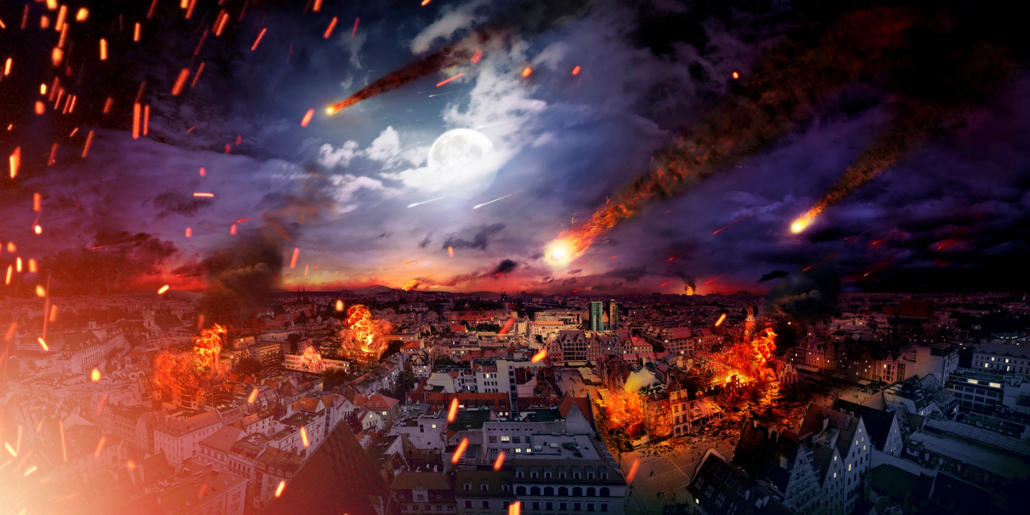 Few biblical words have captured the imagination of the modern world quite like Armageddon. It appears frequently in newspaper headlines, political commentary, films, and popular culture as a synonym for catastrophe, global war, or the end of civilisation. Yet for all its familiarity, Armageddon is widely misunderstood. The word is often divorced from its biblical roots and pressed into service as a vague symbol of chaos or annihilation.
For the serious student of Scripture, this raises an important question: what does the Bible actually mean by Armageddon? Is it a metaphor, a myth, or a real event grounded in geography and prophecy? And more importantly, how does it fit within God’s declared purpose with the earth?
A careful reading of Scripture shows that Armageddon is not a sensational invention, nor a cipher for random destruction. Rather, it is a precise biblical concept, embedded within a consistent prophetic framework that speaks of the judgment of nations, the deliverance of Jerusalem, and the establishment of the Kingdom of God under Christ. When approached reverently and soberly, Armageddon becomes not a message of despair, but one of hope and divine justice.
The Sole Biblical Occurrence of Armageddon
One of the most striking facts about Armageddon is that the word appears only once in the entire Bible:
“And he gathered them together into a place called in the Hebrew tongue Armageddon.”
(Revelation 16:16, KJV)
This alone should caution us against speculative excess. Scripture gives us a single anchor point, and from that point we must reason carefully, comparing scripture with scripture. It is significant that the apostle John, writing in Greek, preserves a Hebrew place-name, alerting us that the meaning lies deeply rooted in Old Testament language and prophecy.
Armageddon is not presented as a theological abstraction, but as a place—a real location where real nations are gathered for a divinely appointed purpose.
The Meaning of the Name Armageddon
The name Armageddon is commonly understood to derive from the Hebrew Har Megiddo, meaning “the mountain of Megiddo.” However, the broader Hebrew sense carries deeper judicial overtones. The word connects with imagery used throughout the prophets: harvest, sheaves, and divine judgment.
This aligns closely with the language of Joel:
“Put ye in the sickle, for the harvest is ripe: come, get you down; for the press is full, the fats overflow; for their wickedness is great.”
(Joel 3:13, KJV)
Armageddon, therefore, is not merely a battlefield. It is a place of divine reckoning, where God brings the political systems of men to account. The emphasis is not on the judgment of individuals—something Scripture reserves for the resurrection and the judgment seat of Christ—but on the judgment of nations.
The Gathering of the Nations
Revelation describes a deliberate and purposeful gathering:
“For they are the spirits of devils, working miracles, which go forth unto the kings of the earth and of the whole world, to gather them to the battle of that great day of God Almighty.”
(Revelation 16:14, KJV)
This gathering is not accidental, nor merely the result of human politics. Scripture consistently presents God as sovereign over international affairs:
“Surely the wrath of man shall praise thee: the remainder of wrath shalt thou restrain.”
(Psalm 76:10, KJV)
The nations are drawn into conflict by their own ambitions and fears, yet unknowingly fulfilling divine purpose. Armageddon represents the climax of human self-rule, when political power asserts itself against God’s declared intention to place His King upon Zion.
Jerusalem at the Centre of the Conflict
Although Armageddon is named in Revelation, the geographical focus of the conflict is clarified by the prophets. Again and again, Scripture points us to Jerusalem as the epicentre of the final confrontation.
Joel writes:
“I will also gather all nations, and will bring them down into the valley of Jehoshaphat, and will plead with them there for my people and for my heritage Israel.”
(Joel 3:2, KJV)
The Valley of Jehoshaphat—commonly identified with the Kidron Valley to the east of Jerusalem—means “Yahweh judges.” This name alone reveals the divine purpose of the gathering. Jerusalem is not chosen arbitrarily; it is the city God has chosen to place His name there.
“Yet have I set my king upon my holy hill of Zion.”
(Psalm 2:6, KJV)
Thus, the nations converge upon Jerusalem precisely because it is the city of the great King.
The Nations Involved: Ezekiel’s Prophecy
Ezekiel chapters 38 and 39 provide further insight into the composition of the invading forces. Ezekiel speaks of a great northern confederacy led by “Gog, (sig. chief one) of the land of Magog (Central Europe) and Gomer (France) and Tagarmah (Turkey)” accompanied by nations such as Persia, Ethiopia, and Libya.
“Persia, Ethiopia, and Libya with them; all of them with shield and helmet.”
(Ezekiel 38:5, KJV)
In contrast stands another group of nations:
“Sheba, and Dedan, and the merchants of Tarshish, with all the young lions thereof.”
(Ezekiel 38:13, KJV)
These appear not as direct combatants, but as observers and objectors. The prophecy suggests a divided world, aligned broadly between a northern military and political alliance and a southern military and political alliance.
King of the North and King of the South
What is essential to note is that the outcome is not determined by military strength, but by divine intervention.
Divine Intervention and the Overthrow of Human Power
The climax of Armageddon is not mutual destruction, but the decisive action of God Himself:
“And I will plead against him with pestilence and with blood; and I will rain upon him, and upon his bands, and upon the many people that are with him, an overflowing rain, and great hailstones, fire, and brimstone.”
(Ezekiel 38:22, KJV)
This language deliberately echoes earlier divine judgments—upon Egypt, upon Sodom, and upon the enemies of Israel throughout history. God intervenes to demonstrate that human sovereignty is temporary and subordinate.
Zechariah reinforces this theme:
“And it shall come to pass in that day, that I will seek to destroy all the nations that come against Jerusalem.”
(Zechariah 12:9, KJV)
Armageddon, therefore, marks the end of the Gentile age, when human dominion gives way to divine rule.
The Revelation of Christ
One of the most profound aspects of Armageddon is that it culminates not merely in destruction, but in revelation. Zechariah continues:
“They shall look upon me whom they have pierced, and they shall mourn for him.”
(Zechariah 12:10, KJV)
The return of Christ is not secret, nor symbolic. He is revealed as the rightful King, vindicated before Israel and the nations. This moment transforms Armageddon from a scene of judgment into the doorway of hope.
Armageddon and the Kingdom of God
Armageddon is not the end of the world. It is the end of a world order. Scripture consistently points beyond judgment to restoration:
“And the LORD shall be king over all the earth: in that day shall there be one LORD, and his name one.”
(Zechariah 14:9, KJV)
Jerusalem becomes the capital of a renewed earth, governed by Christ and his glorified saints. War gives way to peace, exploitation to righteousness, and human pride to divine wisdom.
“Nation shall not lift up sword against nation, neither shall they learn war any more.”
(Isaiah 2:4, KJV)
A Personal Appeal to the Reader
While Armageddon concerns nations, Scripture does not present prophecy merely to satisfy curiosity. It is intended to provoke reflection and response.
“Seeing then that all these things shall be dissolved, what manner of persons ought ye to be in all holy conversation and godliness.”
(2 Peter 3:11, KJV)
The question is not whether Armageddon will come, but whether we are prepared for the Kingdom that follows it. The gospel invitation remains open:
“Repent ye therefore, and be converted, that your sins may be blotted out.”
(Acts 3:19, KJV)
Conclusion: From Fear to Hope
When stripped of sensationalism and grounded firmly in Scripture, Armageddon emerges not as a message of terror, but of assurance. God has not abandoned the earth. He has not relinquished His purpose. Armageddon is the necessary prelude to the reign of righteousness.
For the believer, it is a call to vigilance, faith, and hope. For the honest seeker, it is an invitation to open the Scriptures and discover a God who declares the end from the beginning—and brings it to pass.
