
The Middle East Is Being Rewired and Israel Is at the Center
By David Mark Published: 15th May 2026
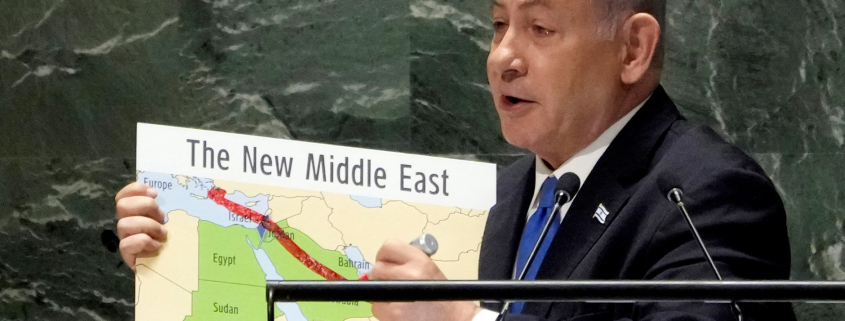
 What appears, at first glance, to be a series of disconnected moves—the UAE’s tightening embrace of India, the maturation of the Greece–Cyprus–Israel military framework, and the quiet push toward recognizing Somaliland—is in fact one coherent strategic design. Different arenas. Same map.
Israel is no longer positioning itself as a state waiting to be absorbed into a regional order. It is helping construct the order itself, corridor by corridor.
The eastern Mediterranean: securing the western gate
The security alignment linking Greece, Cyprus, and Israel has moved well beyond energy diplomacy. What began as gas coordination has hardened into a military framework: joint air exercises, naval interoperability, missile-defense coordination, and persistent intelligence sharing.
This is not posturing. It is infrastructure defense.
Undersea cables, offshore gas fields, maritime routes, and sovereign airspace in the Eastern Mediterranean have become contested assets—particularly as Turkey presses outward and NATO consensus remains elusive. The Greece–Cyprus–Israel framework solves that problem pragmatically. It anchors Israel inside NATO-adjacent systems without the paralysis that formal alliance politics often impose.
Most importantly, it establishes Israel as a net contributor to regional security westward. That matters because it allows Israel strategic flexibility elsewhere.
The Red Sea and the Horn: the southern hinge
That flexibility is now being exercised to the south.
Somaliland is not a symbolic cause or a diplomatic indulgence. It is a geographic fact. Sitting astride the approaches to the Bab el-Mandeb, Somaliland occupies one of the most sensitive maritime chokepoints on the planet—the same artery increasingly threatened by Iranian proxies, regional instability, and great-power competition.
The UAE has understood this for years, building ports, logistics nodes, and basing access across the Horn of Africa. Israel’s interest converges naturally. Recognition—formal or functional—creates strategic depth: a friendly node linking Eilat and the Red Sea to the Indian Ocean, a counterweight to Iranian, Turkish, and Chinese penetration, and a redundancy corridor if Red Sea traffic is disrupted.
This is not about flags or formalities. It is about continuity of movement.
India: the eastern pillar
From there, the line extends east.
The UAE’s 2026 pivot toward India, anchored during Mohammed bin Zayed’s visit to New Delhi, locks in the final pillar. India is uniquely suited for this role: a continental-scale economy, an expanding blue-water navy, and a strategic culture that is allergic to Islamist entanglements while increasingly aligned with Israel on technology, defense, and intelligence.
For Abu Dhabi, India offers strategic depth beyond the Gulf and insulation from Saudi leverage. For Israel, the triangle—Israel, UAE, India—creates something rarer: eastward reach without ideological baggage.
This is where the Saudi–UAE split becomes relevant. Riyadh’s defense agreement with Pakistan, India’s principal rival, signaled to Abu Dhabi that Gulf unity is no longer a given. The response was not escalation, but diversification. Israel should read that clearly.
Why this system excludes hierarchy—and why that matters
Saudi Arabia’s regional model is centralized. It depends on primacy, religious legitimacy, and American arbitration. The system now forming does not. It is modular, functional, and resilient precisely because no single actor controls it.
That is why Riyadh sits adjacent to, rather than inside, this architecture.
Israel should not interpret that as exclusion. It should see it as insulation. The emerging network does not require unanimity or grand bargains. It advances through overlapping interests: maritime security, infrastructure defense, intelligence sharing, and technological interoperability.
One map, one logic
Taken together, the picture is clear:
- Greece–Cyprus–Israel secures the western Mediterranean gateway.
- Somaliland stabilizes the southern hinge at the Red Sea–Indian Ocean junction.
- UAE–India provides eastern reach and strategic depth.
This is not bloc politics. It is corridor politics—designed to constrain Iran, limit Turkish adventurism, hedge against Chinese penetration, and reduce reliance on U.S. micromanagement without undermining the alliance.
For Israel, the significance is profound. For decades, it was treated as a regional exception—integrated reluctantly, conditionally, or not at all. Today, it sits at the intersection of routes, not the margins of maps.
That is not an accident. It is strategy.
A KEY outcome of the Iran War will be to bring Israel and the Southern Gulf Arab countries closer together. Keep watching this development as it is pre-cursor to the time of Peace that muist come according to Bible Prophecy. Peace must come to the Middle East prior to Christ’s Return and the Battle of Armageddon, the Bible is very clear on this as Ezekiel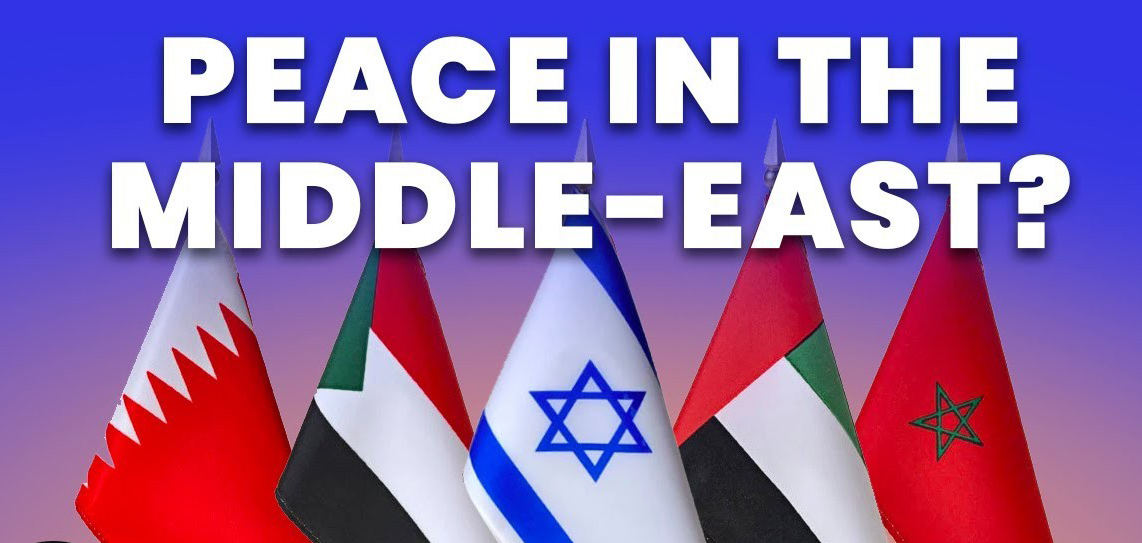 38 shows. Ezekiel 38 describes the Battle of Armageddon and the situation Israel at that time and it says that when Gog and Magog (Russia and Europe) come down to invade Israel will be a land at peace with “unwalled villages” which is a long way from anything we have seen so far. This is what we read…
The word of the Lord came to me: 2 “Son of man, set your face against Gog, of the land of Magog, the chief prince of Meshek and Tubal; prophesy against him 3 and say: ‘This is what the Sovereign Lord says: I am against you, Gog, chief prince of Meshek and Tubal. 4 I will turn you around, put hooks in your jaws and bring you out with your whole army—your horses, your horsemen fully armed, and a great horde with large and small shields, all of them brandishing their swords. 5 Persia, Cush x and Put will be with them, all with shields and helmets, 6 also Gomer with all its troops, and Beth Togarmah from the far north with all its troops—the many nations with you.
10 “ ‘This is what the Sovereign Lord says: On that day thoughts will come into your mind and you will devise an evil scheme. 11 You will say, “I will invade a land of unwalled villages; I will attack a peaceful and unsuspecting people—all of them living without walls and without gates and bars. 12 I will plunder and loot and turn my hand against the resettled ruins and the people gathered from the nations, rich in livestock and goods, living at the center of the land.”
So one of the key outcomes we can expect to see from the recent wars is more Arab countries joining the Abrahamic Accords and settling for Peace and Prosperity instead of war.
This has been Presidents Trumps goal from his first term when he established the Abrahamic Accords, will he now bring Peace to the Middle East.
